Feb 2024 – Jun 2025

Feedback on a full thesis, in minutes.

PaperCheck is a Swiss AI product that reviews theses: structure, arguments, citations and language. I built its main features: AI feedback, page feedback, to-do lists, defense practice and payments.

Next.jsReactTypeScriptNode.jsPython / FastAPIPostgreSQLOpenAI
Feedback delivered10,000+ by Feb 2025
Students today10,000+
papercheck.ai
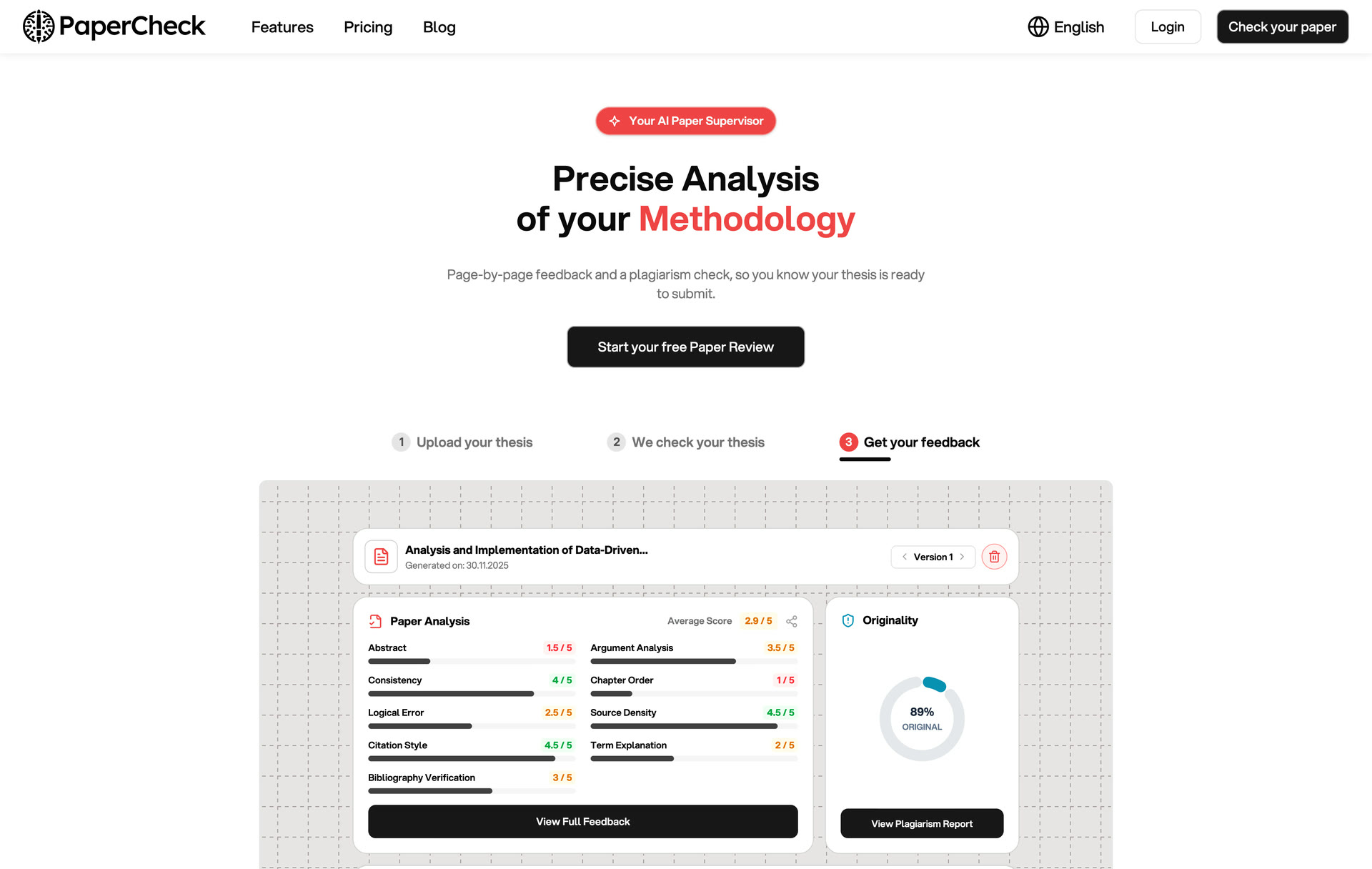
PaperCheck home page

Real product · papercheck.ai, November 2026

The challenge

Review a document of up to 48,000 words, and return feedback a student can act on before the deadline.

What I built

AI feedback by topic, comments on the PDF, a to-do list planned around the deadline, defense practice with voice, payments, and the backend behind them.

The result

Launched in May 2024. More than 10,000 pieces of feedback delivered by February 2025, and a Venture Kick grant. Still live today.

A supervisor that answers the same day.

A thesis is long, the supervisor has little time, and a human proofreader can take days. PaperCheck started as AI Thesis Coach: students upload their paper and get detailed feedback in minutes.

I worked on the product from before the launch. I built the features students use: the upload, the AI feedback, the to-do list, the defense practice and the comments on the PDF, plus the accounts, payments and languages around them.

One rule shaped the product: PaperCheck does not write the thesis. It shows what is weak and how to improve it, and the student stays the author.

From launch in May 2024 to more than 10,000 pieces of feedback delivered nine months later.

Services performed

  • AI feedback with OpenAI models
  • Backend, and its rewrite for 2.0
  • Page feedback on the PDF
  • To-do list planned around the deadline
  • Defense questions and voice practice
  • Upload of large documents
  • Payments, vouchers and free version
  • Accounts, login and email
  • German and English

Tech stack

Next.jsReactTypeScriptJavaScriptTailwind CSSNode.jsPythonFastAPIPostgreSQLOpenAI APIAuth.jsStripeREST API
papercheck.ai
PaperCheck home page
papercheck.ai
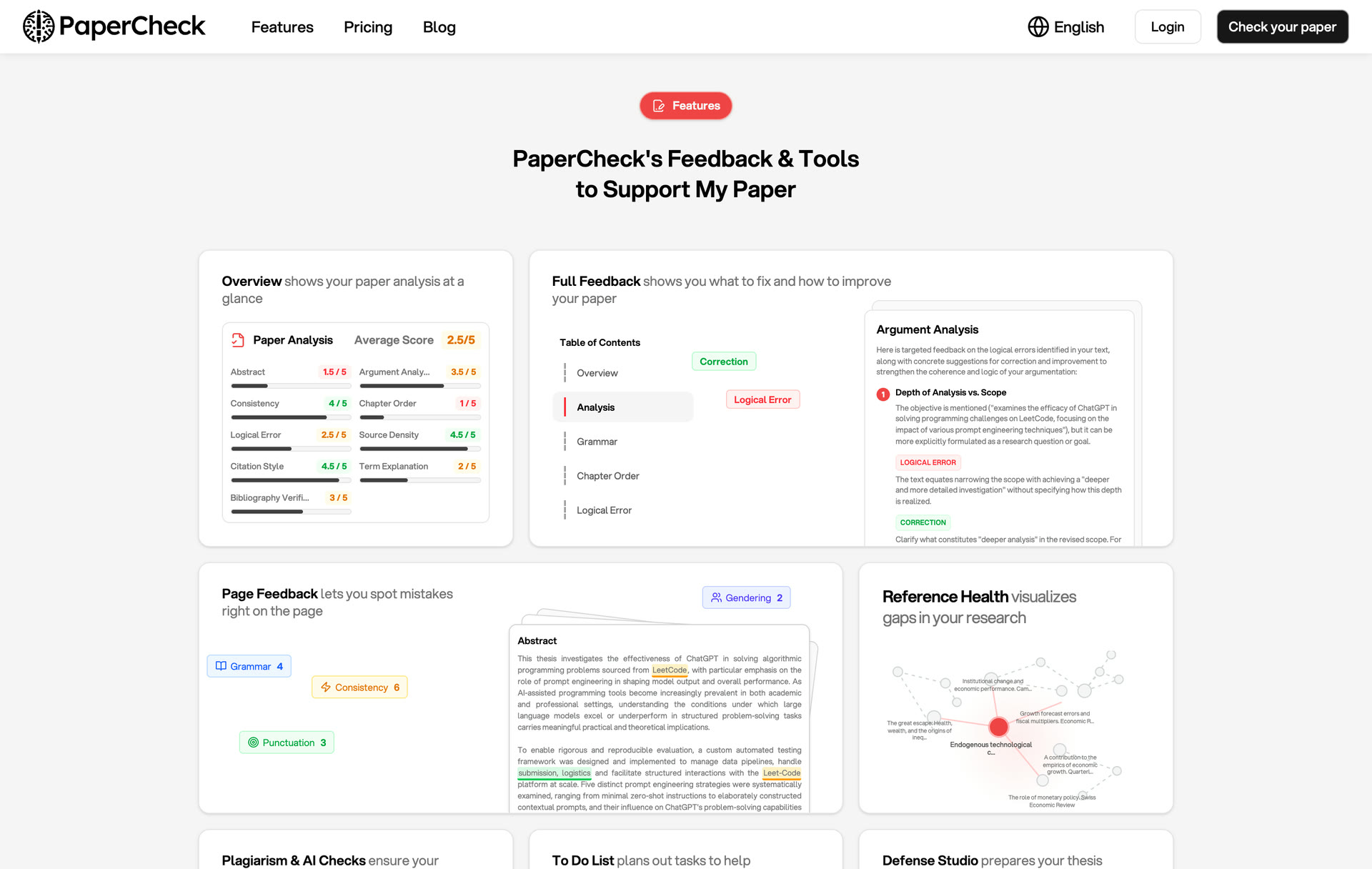
Feedback and tools
papercheck.ai
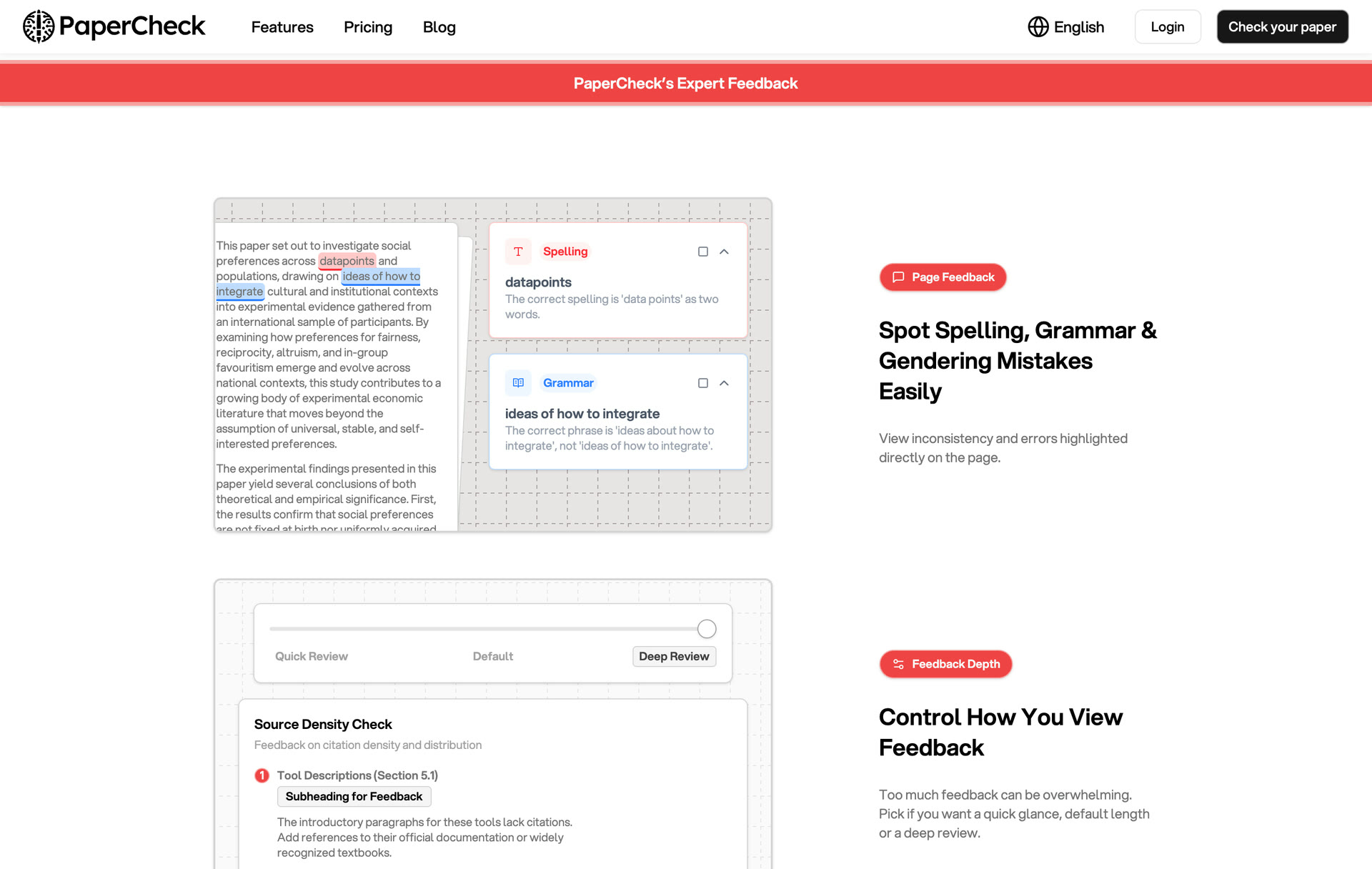
Page feedback
papercheck.ai
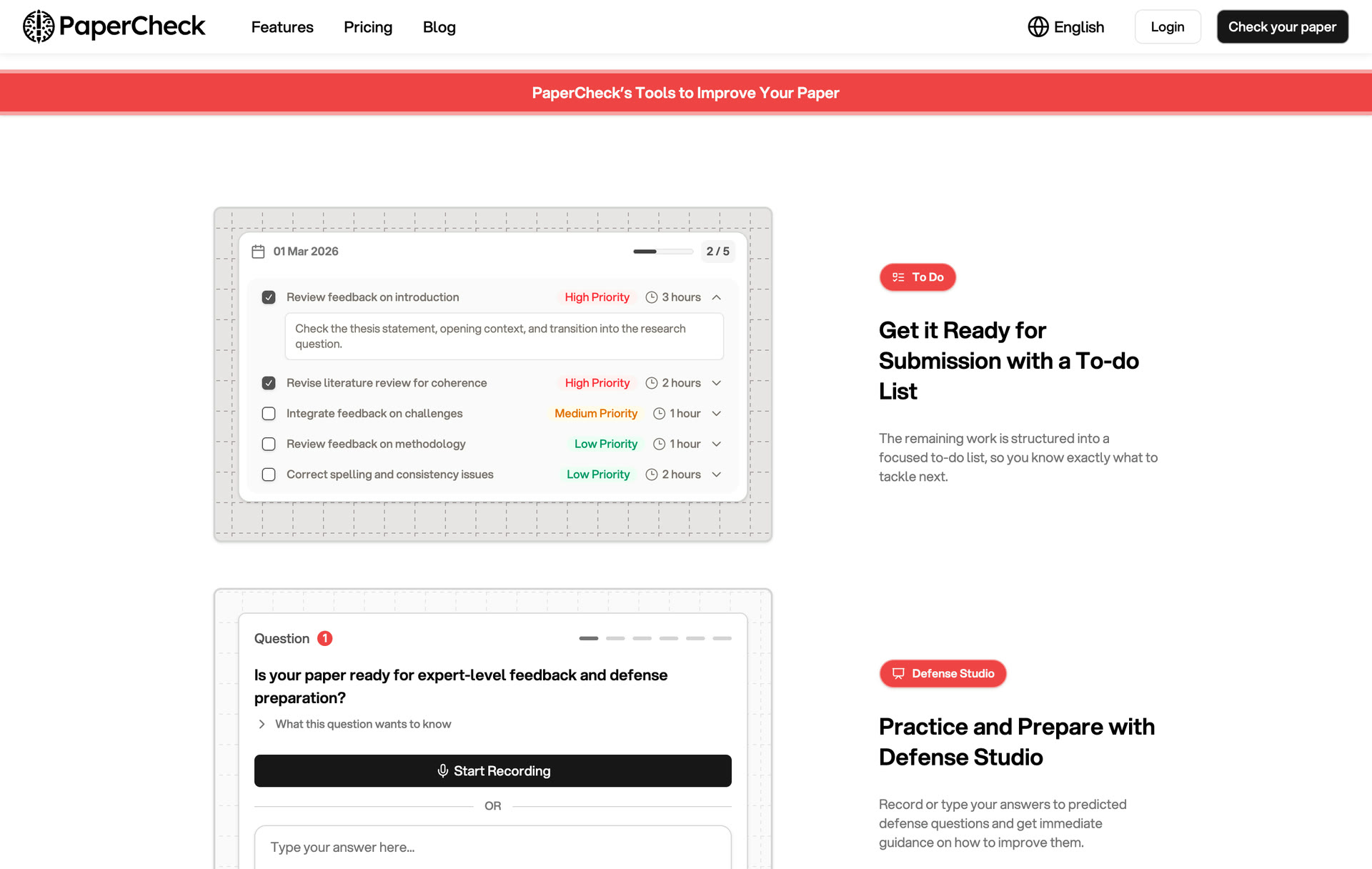
To-do list
papercheck.ai
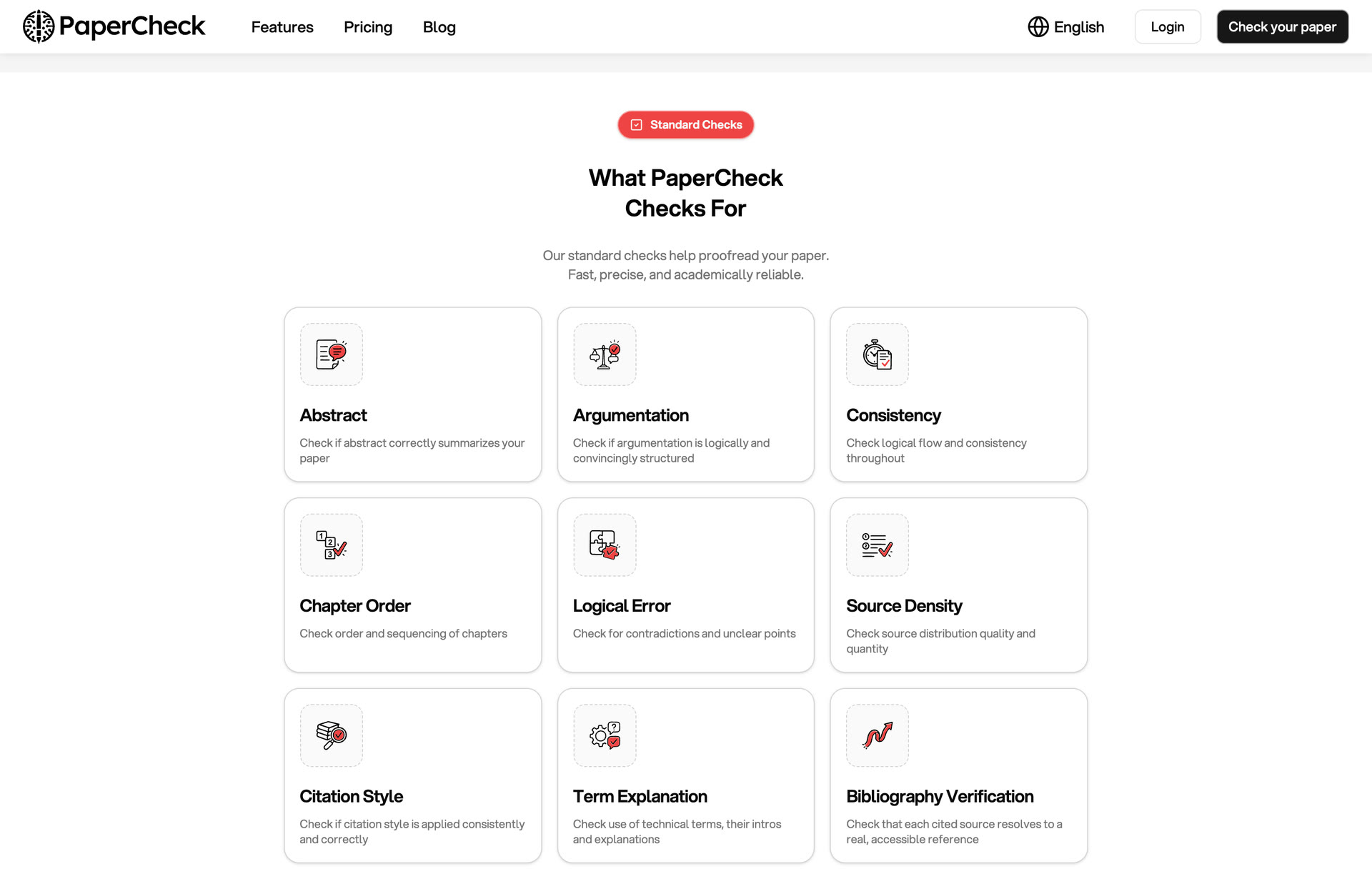
Standard checks
papercheck.ai
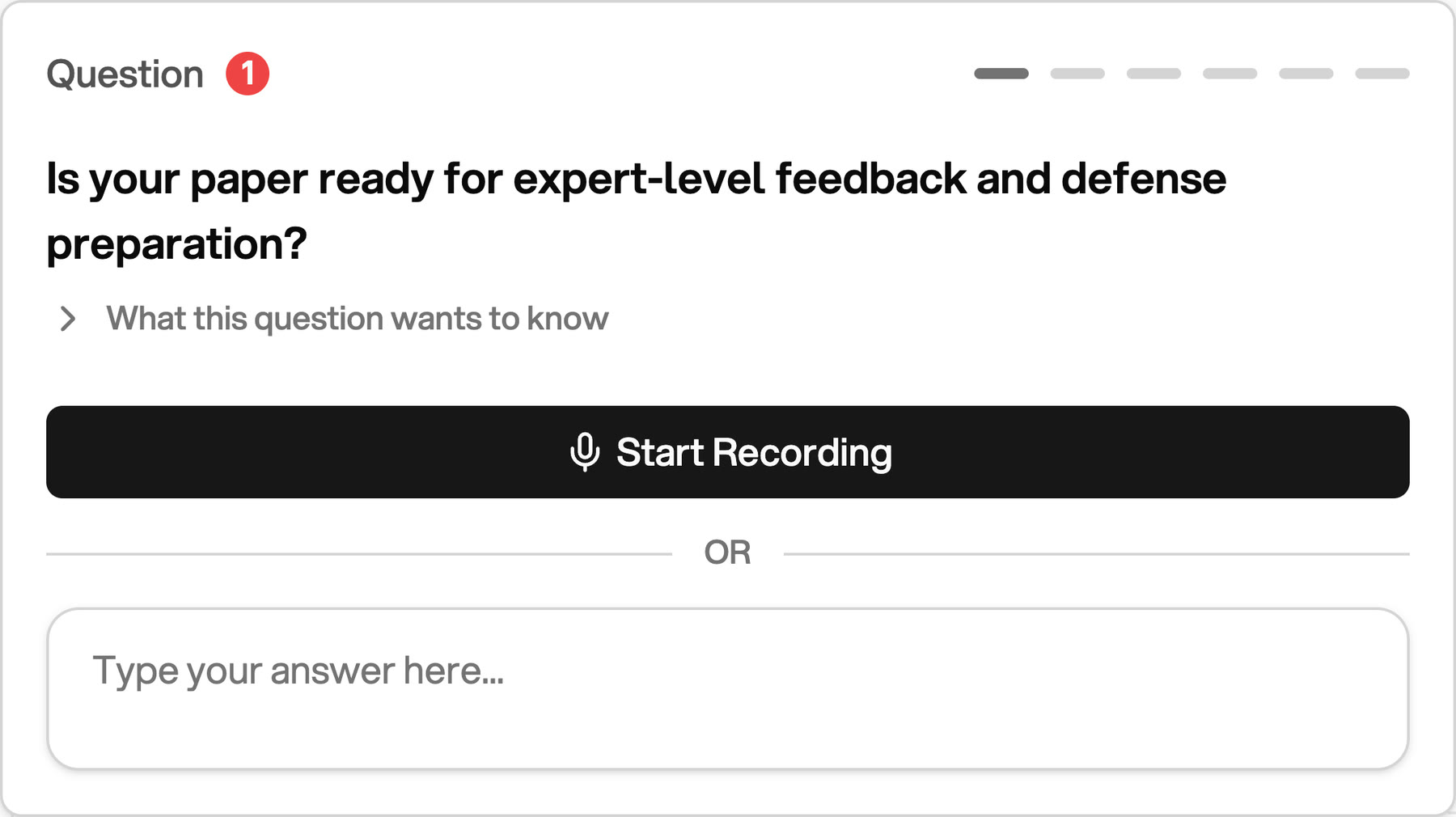
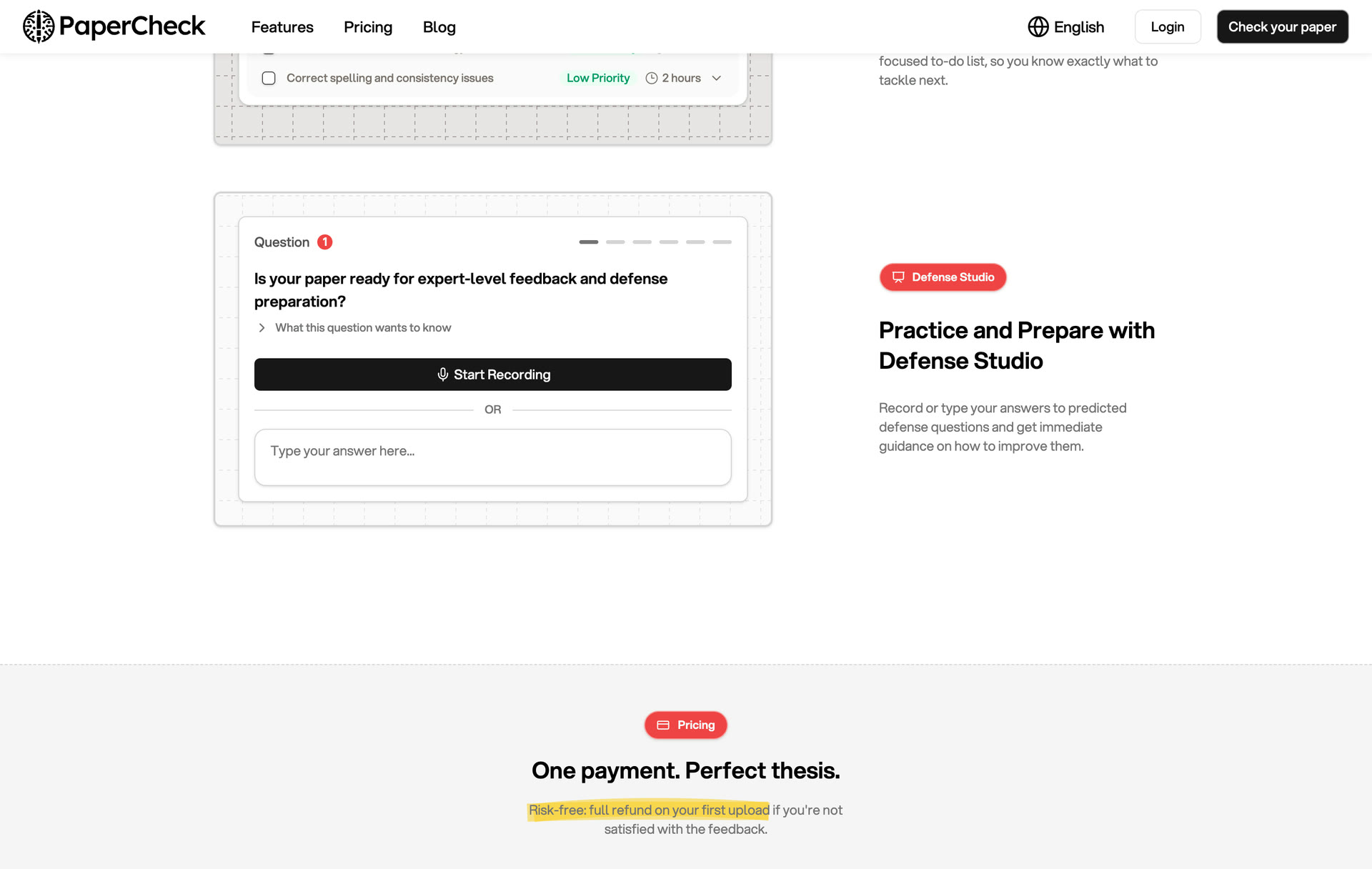
Defense practice

Real screens from papercheck.ai, captured in November 2026. © PaperCheck GmbH

The challenge

“Improve your structure” is not feedback.

General AI chat tools struggled with a full thesis: they could misread the PDF or comment on things that were not in it. Students needed the opposite: precise comments, linked to their own text, sorted by importance, and delivered while there was still time to act.

01Very long documents
02Feedback that points to the text
03Private documents, handled with care

Architecture

From an uploaded thesis to a plan.

The student works in the web app. The backend prepares the document, calls the AI models and stores the results. The numbers point to the stories below.

BackendNode.js · PythonWeb appNext.js · React · TailwindThesis uploadSent from the browserBackend servicesNode.js · Python / FastAPIanalysispage feedbackto-do listdefensepaymentsOpenAI modelsChecks and feedbackSpeech to textAzure, from Dec 2024PostgreSQLPapers · results · tasksPayments and emailStripe · TWINTREST462153

Simplified view, based on my work and the public release notes.

In practice

Six problems, and how I solved them.

Released between May 2024 and May 2025. The problem, what I built, and what it changed.

1

AI · analysis

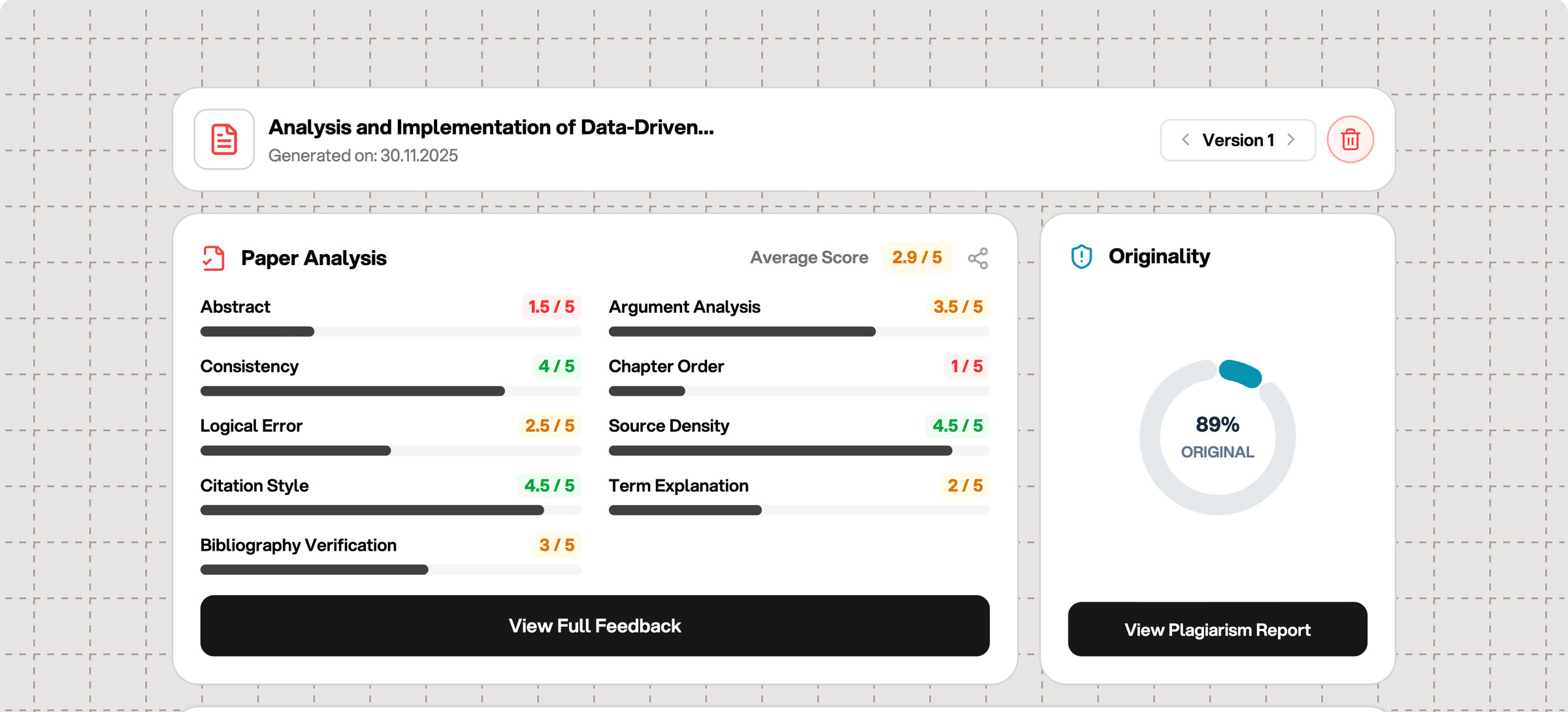
Reviewing a whole thesis, one check at a time

The problem
One question to an AI model about a long thesis gives one vague answer. Students need to know exactly what to fix.
What I built
I used OpenAI models and split the review into checks: cover, abstract, chapter order, logical errors, arguments, citation style, source density and inclusive language. Each check has its own section, with a table of contents, and students can rate how useful it was. After launch, the word limit went from 40,000 to 48,000.
What it changed
Students can jump to one topic at a time, and their ratings show where the feedback should improve.
  1. Upload
  2. Run the checks
  3. Read by topic
  4. Rate the feedback
Paper analysis on papercheck.ai
2

Backend · version 2.0

Rewriting the backend before the next semester

The problem
Three months after launch, the product had real users, and the busiest time was coming: the new semester.
What I built
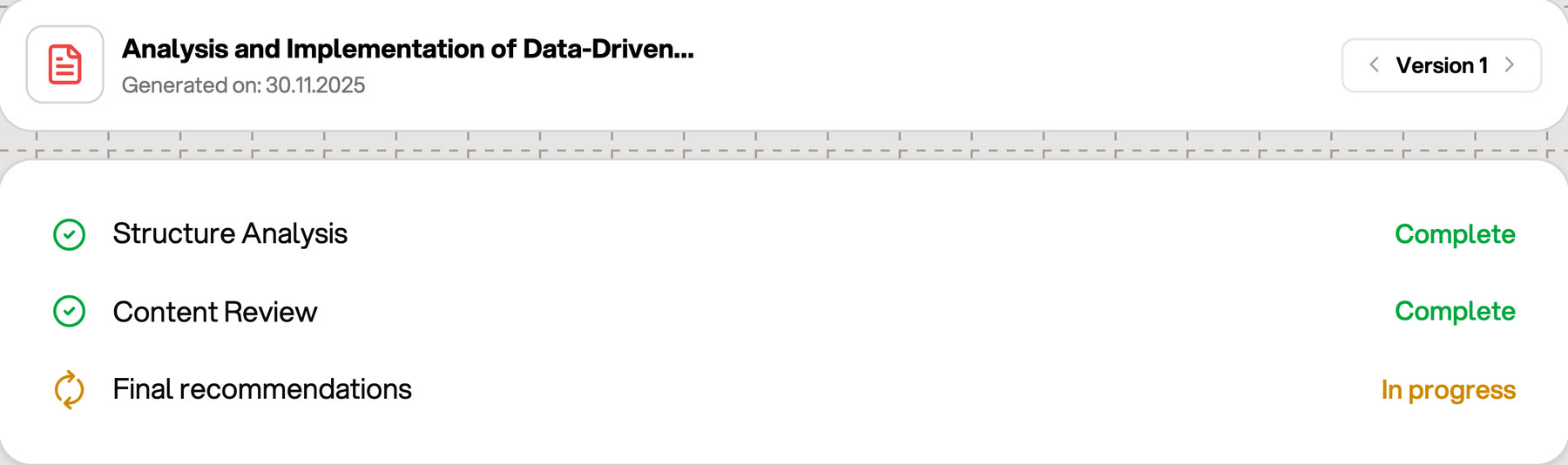
I rewrote the whole backend for version 2.0, released in August 2024, to make it more scalable and more efficient. With the same release, feedback, to-do lists and defense material were sent by email as soon as they were ready. One month later, I moved the checkout logic to the server.
What it changed
Students no longer had to wait on the page for their results. Page feedback, recorded answers and the free version were all released on top of the new backend.
  1. Launch
  2. User feedback
  3. New backend
  4. New semester
Analysis in progress on papercheck.ai
3

Planning · deadlines

Turning feedback into a plan

The problem
Pages of good feedback can still be stressful when the deadline is close. Where should a student start?
What I built
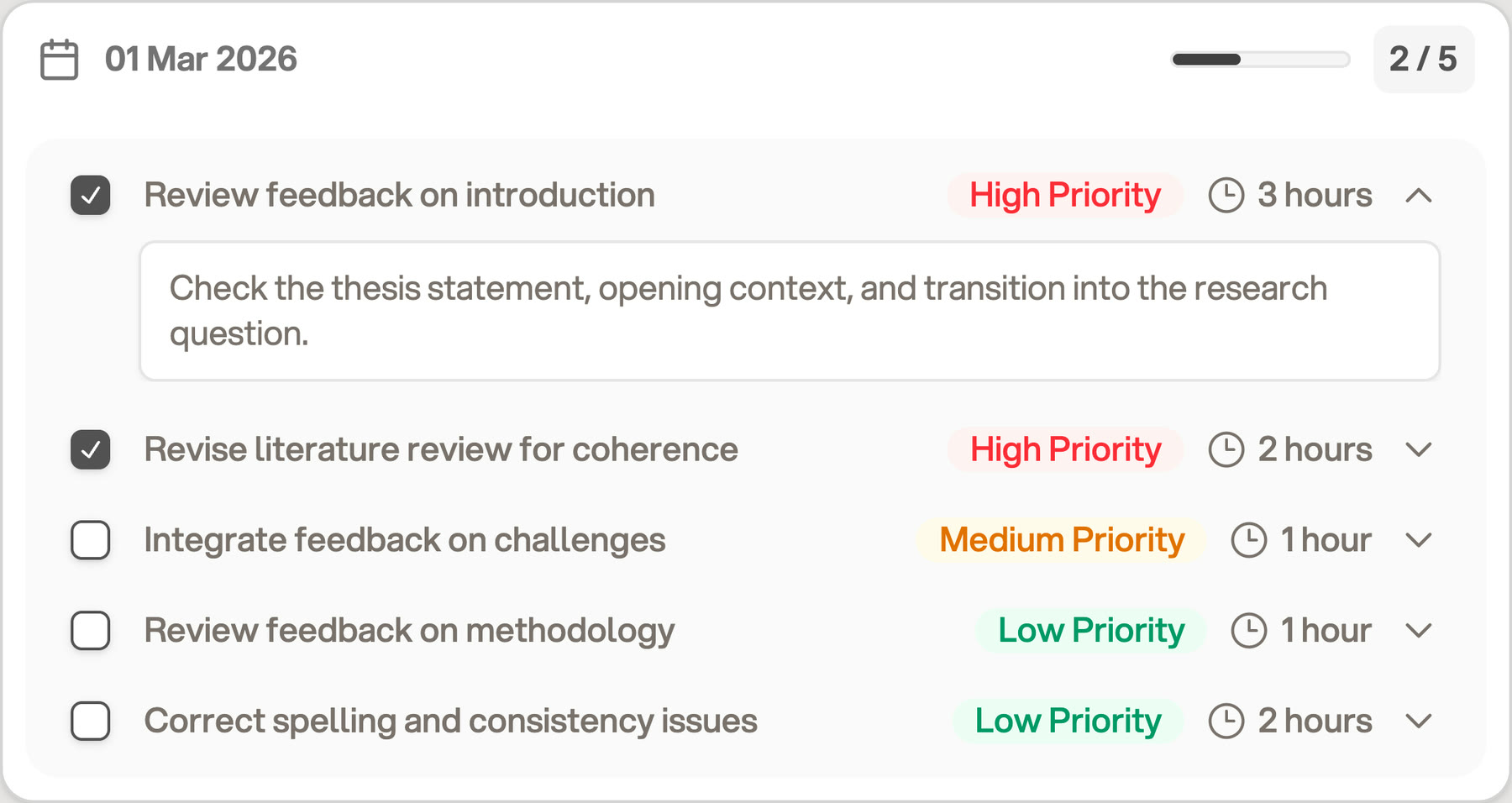
I built a to-do list created from the feedback and the submission date. Students follow the plan and check off each task. An early bug planned tasks after the deadline; I fixed it in the first days after launch.
What it changed
The feedback becomes a list of small steps that fits the time left.
  1. Feedback
  2. Submission date
  3. To-do list
  4. Check off tasks
To-do list on papercheck.ai
4

Frontend · page feedback

Putting the comment on the exact line

The problem
A comment like “check your grammar in chapter 3” leaves the student to search for the mistake.
What I built
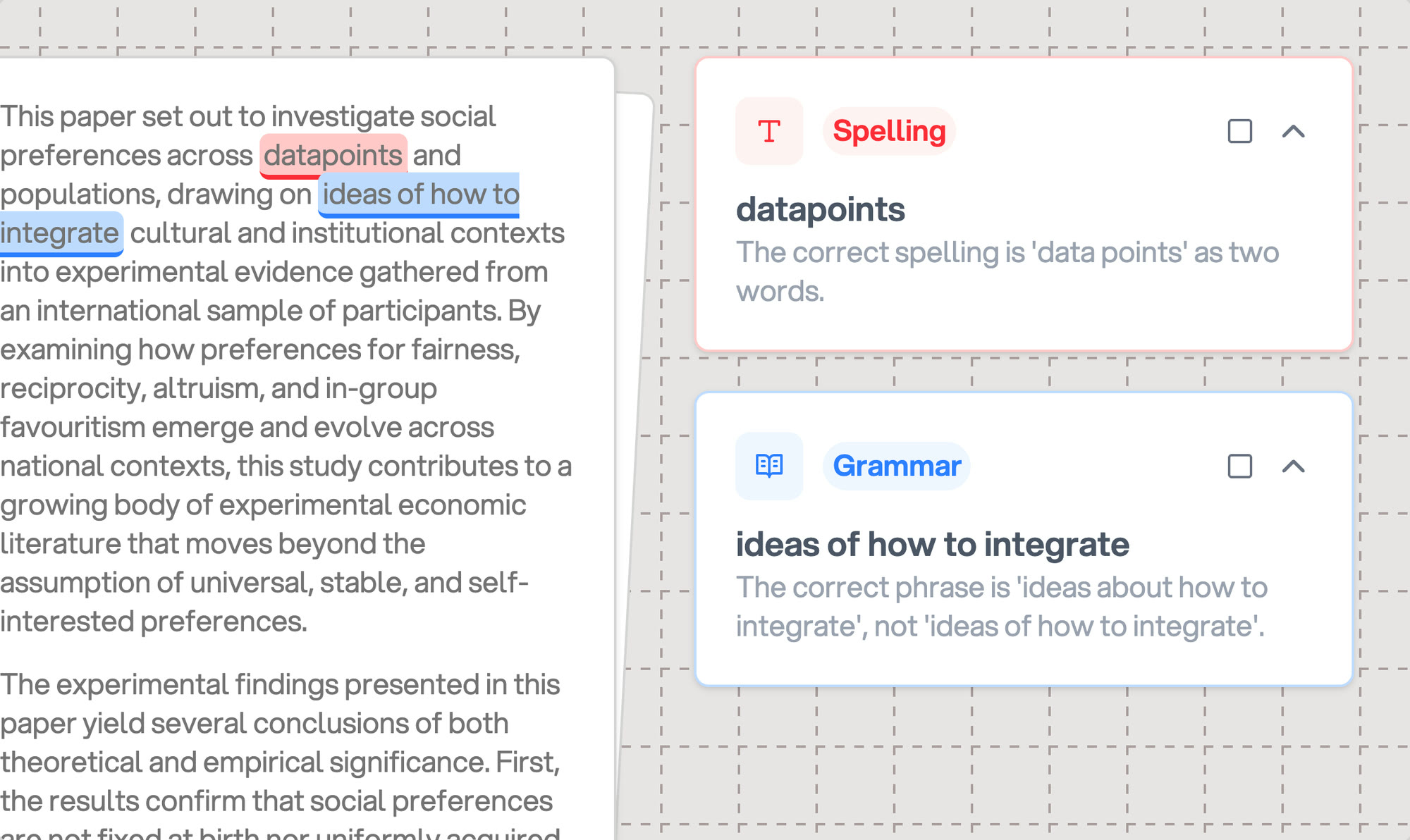
I built page feedback, released in May 2025. It highlights the text inside the PDF, the comments follow the page as the student scrolls, and each one can be marked as done. I also improved PDF loading and its error messages.
What it changed
Students see the mistake and the correction together, and know what is left to review.
  1. Open the PDF
  2. See highlights
  3. Read the comment
  4. Mark as done
Page feedback on papercheck.ai
5

AI · voice

Practicing the defense out loud

The problem
After the thesis comes the oral defense, and reading a list of questions is not real practice.
What I built
I first built questions generated from the thesis. Then came the practice: students record their answers and get feedback on them. I made the transcription multilingual and moved it to Azure.
What it changed
Students can rehearse in their own language, with questions about their own work.
  1. Questions from the thesis
  2. Record an answer
  3. Transcribe
  4. Get feedback
Defense practice on papercheck.ai
6

Reliability · uploads

When a thesis is too big for the server

The problem
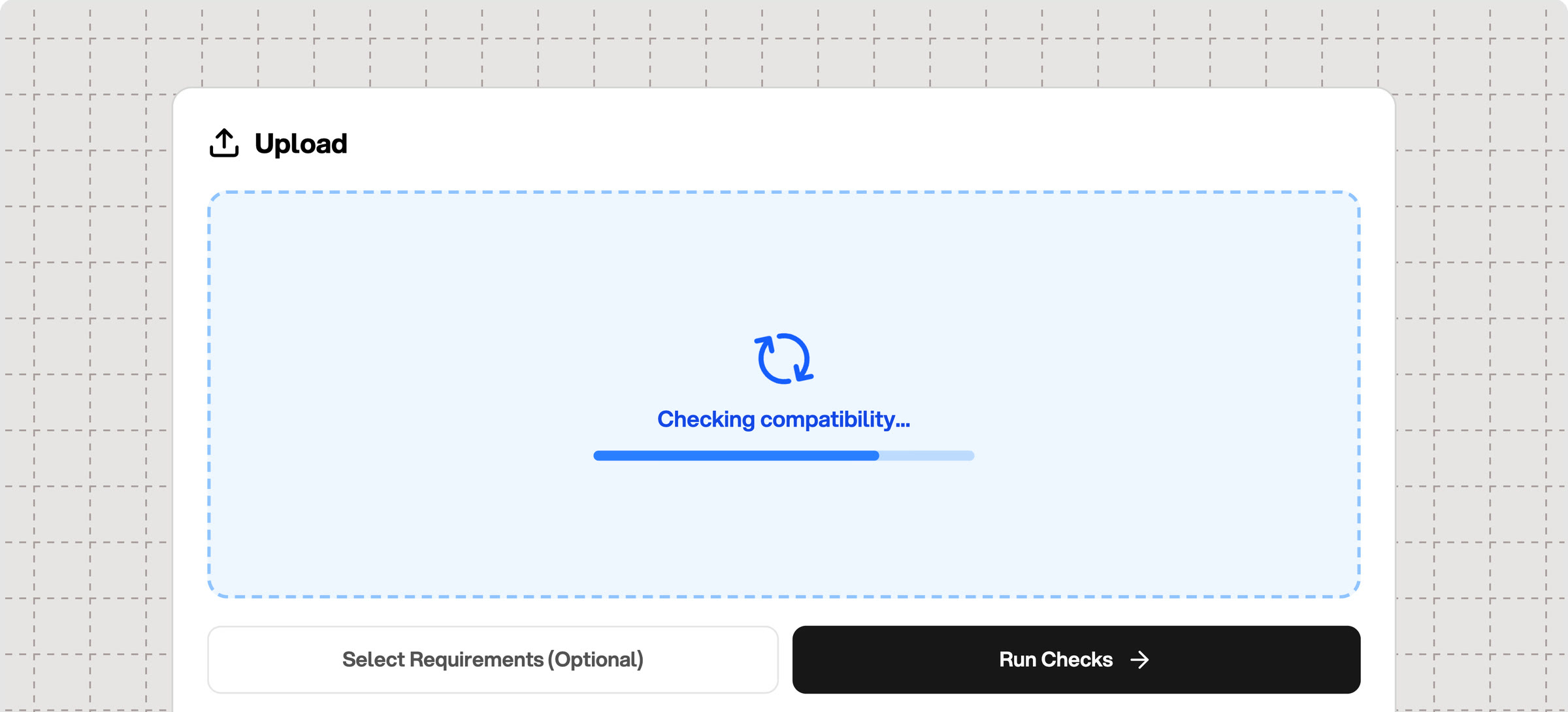
A thesis with images can be a large file. Some uploads failed with a 413 error: the request was bigger than the server accepts.
What I built
I moved large files to a client-side upload, so they no longer pass through the server request that had the limit. I also added drag and drop.
What it changed
Large files could be uploaded without hitting that limit, at the moment when students need the product to work.
  1. Choose a file
  2. Upload from the browser
  3. Start the analysis
Upload on papercheck.ai

Everything I built

Feedback

  • AI checks with OpenAI models
  • Sections with a table of contents
  • Ratings and comments on each section
  • Results sent by email
  • A separate view for each check

Page feedback

  • Highlights inside the PDF
  • Comments that follow the scroll
  • Mark each comment as done
  • Opens from the analysis pages
  • Loading and error states

To-do list and defense

  • Plan built around the deadline
  • Tasks to check off
  • Questions from the thesis
  • Recorded answers with feedback
  • Multilingual transcription

Payments

  • Stripe checkout on the server
  • Cards and TWINT
  • Several currencies and local prices
  • Vouchers, discounts and coupons
  • Free version with paid unlock

Accounts and languages

  • Login by code, then Auth.js
  • Sign-in page and sign-up flow
  • German and English
  • Deadline reminders by email
  • Data retention and privacy pages

Website

  • Landing page and pricing
  • Page load from 0.9 to 0.3 seconds
  • Reviews, voucher and partner pages
  • Mobile menu and layouts
  • User surveys

Real screens from papercheck.ai, captured in November 2026. The design has evolved since my work ended. © PaperCheck GmbH

Timeline

From launch to page feedback.

The main steps during my period, from PaperCheck’s public blog and release notes.

  1. Launch

    AI Thesis Coach goes live in Switzerland.

  2. Version 2.0

    Rewritten backend, results by email, TWINT.

  3. PaperCheck

    New name, English papers, defense practice.

  4. Free version

    Part of the feedback is free to try.

  5. Venture Kick

    A CHF 10,000 grant. 10,000+ pieces of feedback delivered.

  6. On the page

    Comments directly on the PDF.

Outcome

What I delivered

  • AI feedback on a full thesis with OpenAI models, split into checks, with results by email
  • The full backend rewrite for version 2.0
  • Page feedback: highlights and comments directly on the PDF
  • A to-do list built from the feedback and the submission date
  • Defense questions and voice practice with multilingual transcription
  • Client-side upload for large documents, with drag and drop
  • Stripe payments: cards, TWINT, several currencies, vouchers and a free version
  • Accounts, login by code, then the move to Auth.js
  • German and English, for the website and the analyzed papers
  • Landing, pricing, reviews, voucher and partner pages
Live — my work ended in June 2025

Where it is today

PaperCheck is live at papercheck.ai, now at version 3, and says more than 10,000 students trust it. My work ended in June 2025. Plagiarism, AI detection and voice sessions came later.

The first ten days

Ten days after launch, I had already shipped changes based on user feedback: login by code, a higher word limit, better feedback on the line of argument, and a page load reduced from 0.9 to 0.3 seconds.